


How to Remove Stains from Upholstery Without Damaging Fabric
Knowing how to remove stains from upholstery can save your couch from a coffee spill, a greasy fingerprint, or a muddy paw print. The safest method is simple: check the care label, blot (never rub), patch test, and use only as much cleaner as the fabric allows.
Most upholstery damage comes from the cleaning, not the stain. Rubbing spreads marks, soaking leaves watermarks, and the wrong product can strip colour. This guide walks you through seven safe steps, with a stain-by-stain chart so you know exactly what to do for the spill in front of you.
Quick answer: Check the care code (W, S, WS or X), blot the spill with a clean white cloth, patch test your cleaner on a hidden spot, treat the stain with a method that suits the fabric, then let it dry fully. If the code is X or the fabric is delicate, call a professional.
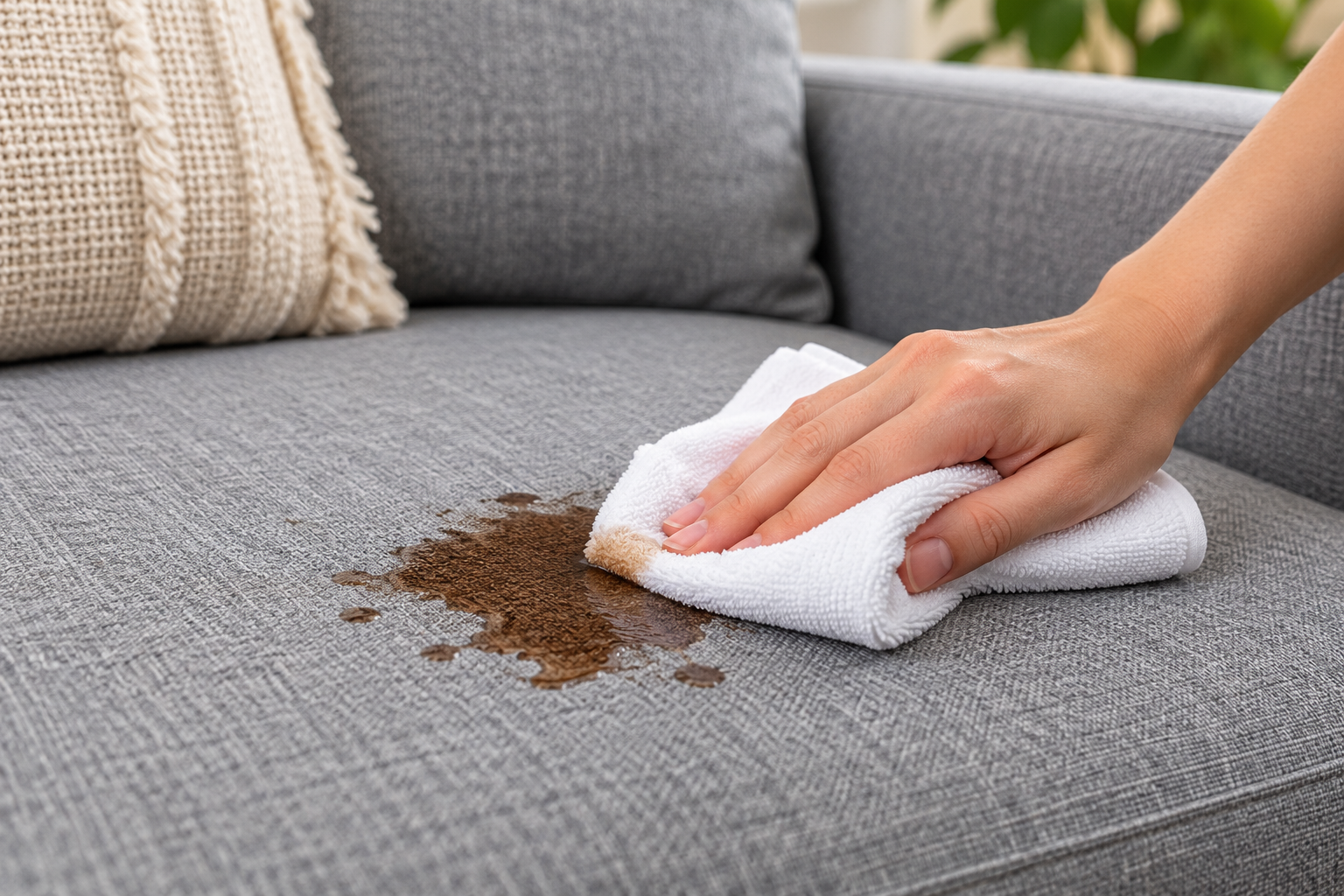
The 5 Golden Rules of Upholstery Stain Removal
These five rules apply to every stain in this guide, so you only need to read them once. If anything in this guide conflicts with your care label or your cleaner's instructions, follow the label.
- Act fast. Fresh spills are far easier to lift than set-in marks.
- Blot, don't rub. Press with a clean cloth, working from the outside in.
- Patch test first. Try any product on a hidden spot and let it dry before treating the stain.
- Go easy on moisture. A lightly damp cloth beats a soaked cushion every time.
- Never mix products. Different cleaners can react or leave residue behind.
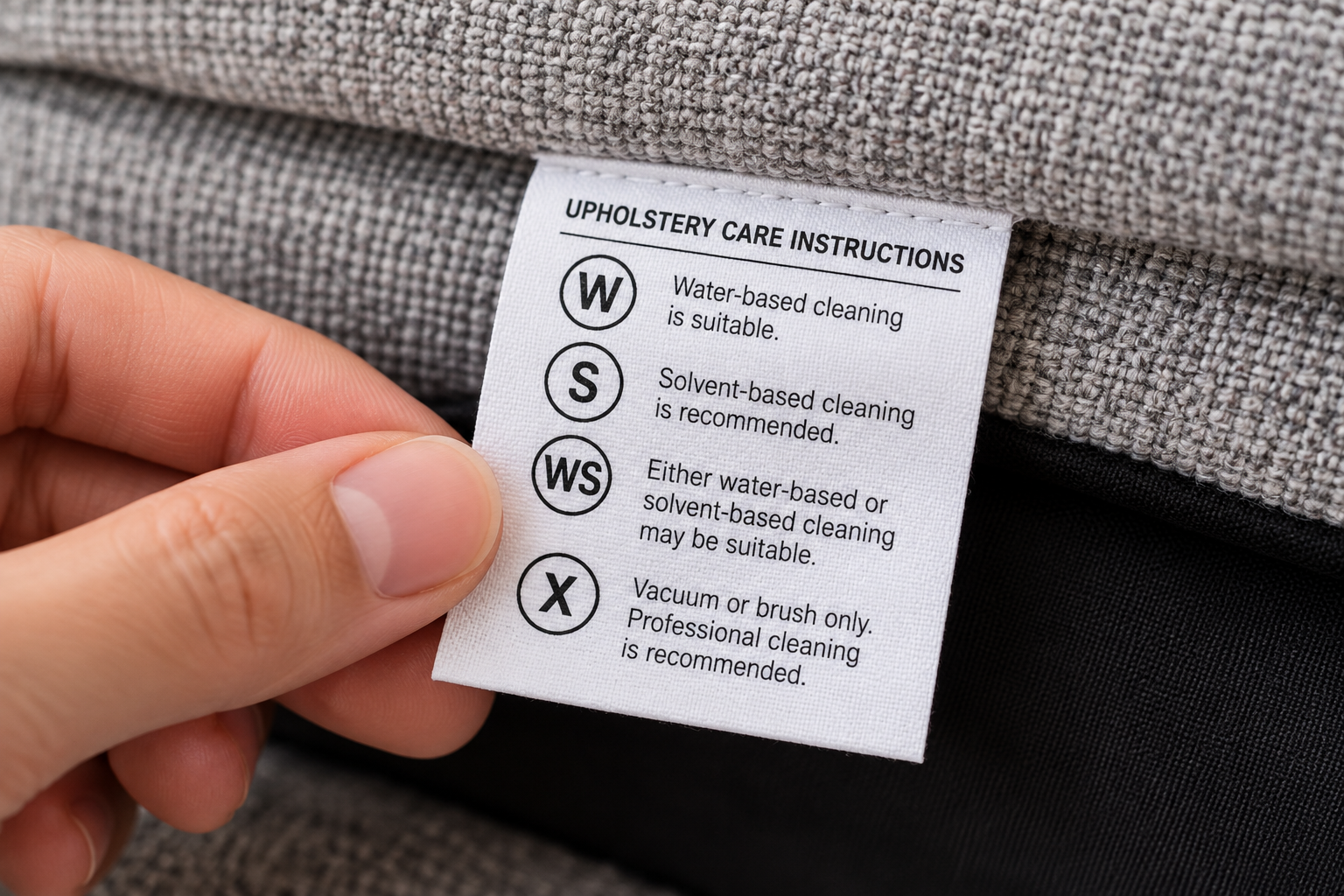
Step 1: Check the Upholstery Care Label
The care label tells you which cleaning method your fabric can handle, so read it before you touch the stain. Look for a tag under a seat cushion or on the base of the furniture.
| Code | What it means | What to use | What to avoid |
|---|---|---|---|
| W | Water-based cleaning is suitable | Mild water-based upholstery cleaner or a mild detergent solution | Soaking the fabric |
| S | Solvent-based cleaning is recommended | A dry-cleaning solvent made for upholstery, used in a well-ventilated room | Water-based cleaners, unless the manufacturer says otherwise |
| WS or SW | Either method may be suitable | Whichever method the manufacturer's instructions support | Combining the two methods |
| X | Vacuum or brush only; specialist care advised | Vacuuming, then a professional cleaner | Any liquid cleaner, DIY or otherwise |
Codes can vary by manufacturer, and not every piece of furniture has a label. If you can't find one or aren't sure what your fabric is, contact the manufacturer or a professional upholstery cleaner before you start.
Step 2: Remove Loose Dirt and Blot the Stain
Start by clearing crumbs and debris so they don't get ground into the fabric while you clean.
- Vacuum the area around the stain using an upholstery attachment.
- For solid mess (food, mud, pet waste), lift the excess with a spoon or blunt edge. Don't scrape hard.
- For liquids, press a clean white cloth onto the spill and lift. Use a fresh section of cloth each time.
- Work from the outer edge of the stain towards the centre to stop it spreading.
Use a white cloth so no dye transfers onto your upholstery. Fresh spills are easiest to treat, so don't wait to blot.
Step 3: Patch Test Your Cleaner
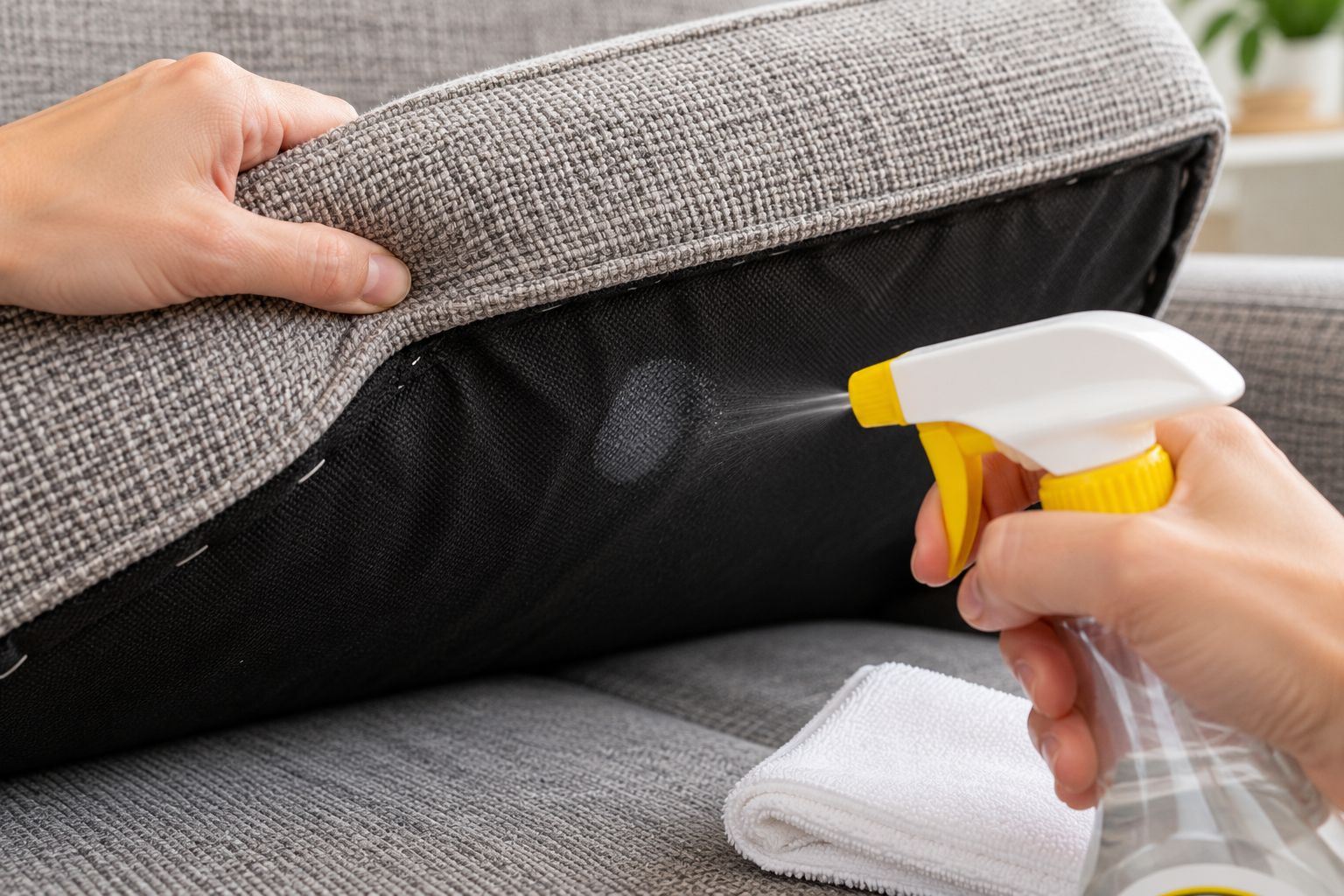
A patch test takes five minutes and can save your couch.
- Choose a hidden spot, such as the underside of a cushion or the back skirt.
- Apply a small amount of your cleaner exactly as the label directs.
- Blot, then let the spot dry fully.
- Check for colour change, ring marks, or a change in texture. If you see any, don't use that product on the stain.
Be extra careful with coloured, delicate, or older fabrics, and any piece with an unknown cleaning history.
Step 4: Treat the Stain (Stain-by-Stain Guide)
Check the care label first. Your furniture's care label and your cleaner's instructions always come before anything in this guide. The methods below are general starting points, and some don't suit every fabric: water can leave rings on silk, velvet, or viscose, and powders or detergent can leave residue or change some finishes. Patch test everything, and if you're unsure, ask the manufacturer or a professional.
Use the chart to find your starting point, then the steps under it. If your care label allows water-based cleaning, choose an upholstery cleaner suited to your fabric as the first choice. A few drops of clear dish detergent in a cup of cool water is a common alternative for W-code fabrics only, and it still needs a patch test. For S-code fabrics, use a solvent-based upholstery cleaner and follow its label. For X-code furniture, don't use liquid cleaners.
| Stain | First move | Then treat with (only if your care label allows) | Avoid |
|---|---|---|---|
| Coffee and tea | Blot straight away | A cleaner suited to your fabric and care code | Pouring water on the spot |
| Red wine | Blot, don't rub | A cleaner suited to your fabric and care code | Rubbing, which pushes it into the fibres |
| Food and sauce | Lift off solids with a spoon | A cleaner suited to your fabric and care code | Grinding it into the weave |
| Grease and oil | Blot excess oil. Use a dry absorbent powder only if the fabric suits it and you've patch tested | A cleaner suited to your fabric and care code | Heat and hard scrubbing |
| Mud | Let it dry, then vacuum | A cleaner suited to your fabric and care code | Wiping wet mud |
| Pet accidents | Blot liquid, lift solids | Upholstery-safe enzyme cleaner after a patch test | Soaking the cushion |
Coffee and tea
- Blot up as much liquid as you can with a clean white cloth.
- Dab the mark with a cloth lightly dampened in your chosen cleaner (check your care code first).
- If your care label allows water, blot with a second cloth lightly dampened with plain water to lift residue. Skip this on S-code and water-sensitive fabrics.
- Press with a dry cloth and let the area dry.
Food and sauce stains
- Lift solids with a spoon or the edge of a blunt knife.
- Blot the remaining residue. Don't rub.
- Dab with your chosen cleaner, working from the outside in.
- If your care label allows water, blot with a clean, lightly damp cloth. Then let it dry.
Greasy or oily marks
- Blot excess oil without spreading it.
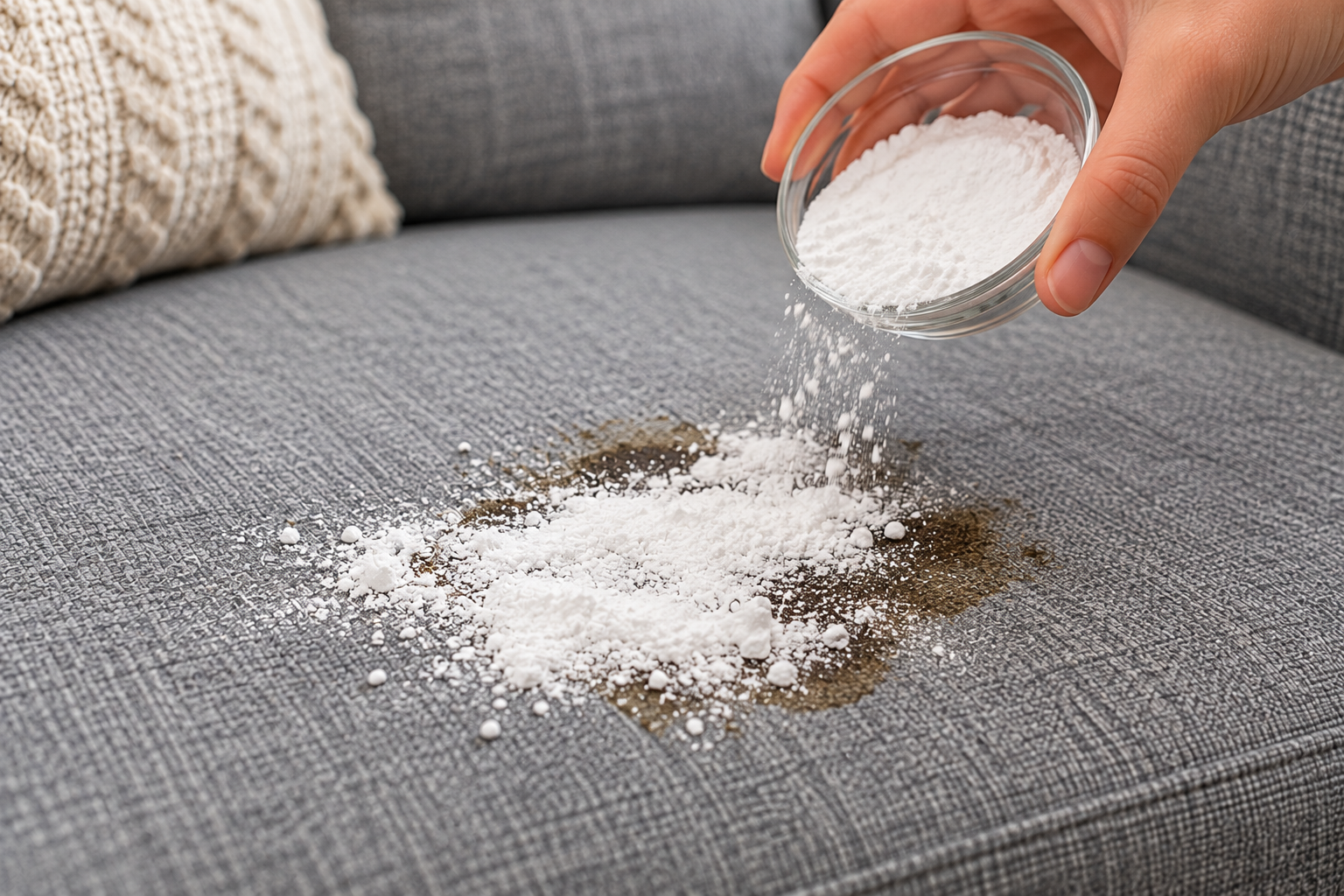
- Only if the fabric isn't delicate or deeply textured, patch test a small amount of bicarbonate soda or cornflour first. If it's safe, sprinkle a thin layer over the mark and leave it for 15 to 30 minutes to absorb the oil. Skip powders on X-code furniture, velvet and other pile fabrics, and ask a professional instead.
- Gently vacuum the powder away with a soft upholstery attachment and check that no residue is left.
- Treat any leftover mark with a cleaner that suits your fabric's care code. Don't use heat.
Mud and everyday dirt
- Let wet mud dry completely. Wiping it now will smear it.
- Break up and brush off dried mud, then vacuum the area.
- Dab any remaining mark with a compatible upholstery cleaner, following the label.
Pet-related spills
- Remove solids and blot liquid with paper towels.
- Patch test an upholstery-safe enzyme cleaner, then apply it as directed.
- Blot and let the area dry fully.
- If an odour lingers or the stain has soaked into the cushion, book a professional clean.
Remember: These are general starting points, not guaranteed fixes, and they don't suit every material. Your furniture's care label and your cleaner's instructions always come first. If a step here conflicts with either, follow the label.
Step 5: Clean Without Over-Wetting
Too much moisture is the main cause of watermarks and damp cushion filling. Aim for a damp cloth, not dripping.
- Apply the product in the amount the label recommends. More is not better.
- Keep the treated patch small and work inwards from the edge.
- Follow the label on wiping, rinsing or removing residue.
- Switch to a clean section of cloth as soon as it picks up colour.
For delicate, non-colourfast or specialist fabrics, professional cleaning is the safer choice.
Step 6: Let the Upholstery Dry Properly
Drying well is part of the clean. Damp fabric can water-ring or develop a musty smell.
- Open a window or run a fan to improve airflow, if suitable for the room and fabric.
- Keep people and pets off the area until it is completely dry.
- Don't cover the spot or put cushions back while it's damp.
- Check the area in natural light once dry. If a faint mark remains, repeat the gentle process rather than adding extra product.
If the cushion stays wet inside or a musty smell develops, get professional advice instead of applying more cleaner.
Step 7: Use a Cleaner Designed for Upholstery
For everyday dirt, oil, and grime on suitable fabrics, a purpose-made upholstery cleaner is a better choice than improvised household mixtures. Just make sure it matches your furniture's cleaning requirements.
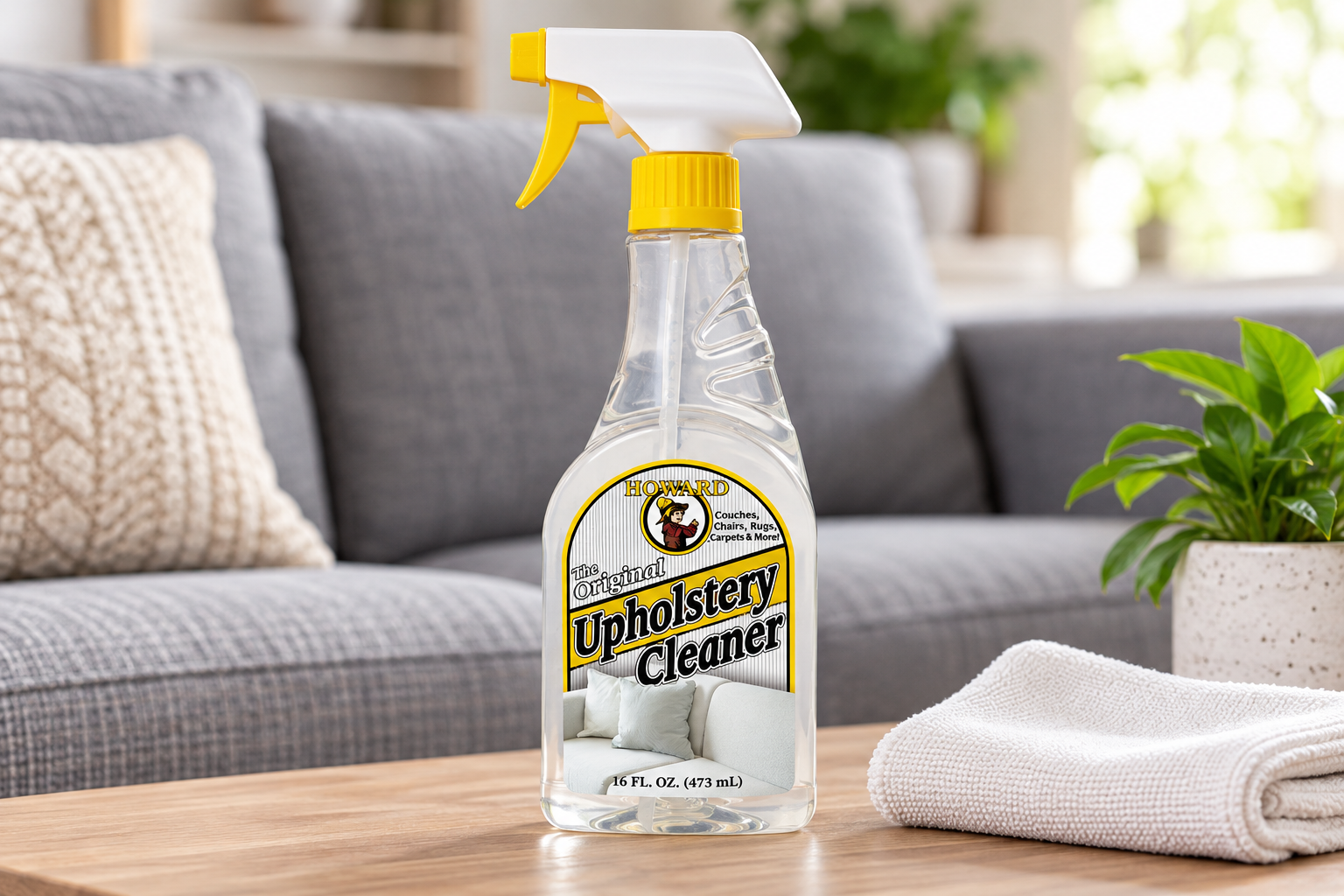
Howard Upholstery Cleaner 473ml is a coconut-derived cleaner for upholstery. The product page lists it as safe for cotton, linen, wool, nylon, polyester, and man-made fibres, and gives its ingredients as coconut soap, a coconut-based surfactant, purified water, and an essential oil and fragrance blend (Lemongrass-Lime). The page doesn't mention fabric care codes, so don't assume it suits every W or WS fabric. Check your care label and the bottle directions first.
It's a good fit when:
- Your fabric is cotton, linen, wool, nylon, polyester, or another man-made fibre, as listed on the product page.
- Your furniture's care label doesn't rule out water-based cleaners. The ingredients include purified water, so treat it as a water-containing formula.
- You're dealing with everyday marks from dirt, oil, and grime on a couch, armchair, or dining chair.
Not the right choice when:
- Your care label says S (solvent only) or X (vacuum or professional care), unless the furniture manufacturer or Howard confirms it's suitable.
- Your fabric isn't on Howard's list, such as silk or velvet. Check with Howard or a professional first.
- The fabric is delicate, antique, or prone to colour bleeding. Ask a professional.
How to use it:
- Read the product label and confirm your fabric is suitable.
- Patch test a hidden area and let it dry.
- Vacuum the surface, then apply the cleaner as directed on the label.
- Gently blot the area with a clean cloth. Don't rub or soak.
- Let the upholstery dry fully before using it again.
The product page doesn't publish directions for use, so take the amount and method from the bottle label rather than from this guide.
Shop Howard Upholstery Cleaner 473ml
Common Upholstery Cleaning Mistakes to Avoid
Most of these come back to the golden rules above, but they're worth a quick scan before you start.
| Mistake | What can go wrong | Do this instead |
|---|---|---|
| Scrubbing hard | Spreads the stain and roughens fibres | Blot gently |
| Using too much water | Watermarks and damp cushions | Use a lightly damp cloth |
| Skipping the patch test | Colour or texture damage | Test a hidden spot first |
| Using the wrong product | Fabric damage or residue | Match the product to the care code |
| Mixing cleaners | Reactions or residue | Use one product at a time |
| Ignoring the care label | Voided care advice, damaged fabric | Read the label first |
| Applying heat | Can set some stains | Avoid it unless the label says so |
When to Call a Professional Upholstery Cleaner
Home cleaning suits many everyday spills, but get professional help when:
- The care label specifies professional or specialist cleaning (code X).
- The stain is old, deeply embedded, or covers a large area.
- The fabric is delicate, antique, valuable, or prone to colour bleeding.
- Earlier cleaning attempts have left watermarks or residue.
- Odours or moisture remain deep inside the cushions.
Asking early can save you repeated attempts that make the problem worse.
Frequently Asked Questions
How do you remove stains from a fabric couch?
Check the care label, blot the spill with a clean white cloth, then treat it with a cleaner that suits your fabric's code. Patch test first, and let the area dry fully.
Can you use a household cleaner on upholstery?
Not always. Some household cleaners can change fabric colour, texture, or finish. Choose a product made for upholstery and follow its directions.
What is the best way to remove old upholstery stains?
The right method depends on the stain and fabric. Check the care label, don't mix products, and consider professional treatment if the stain is set in or the fabric is delicate.
How can I prevent watermarks when cleaning a couch?
Use a lightly damp cloth instead of soaking the fabric, apply only the recommended amount of cleaner, and let the area dry fully with good airflow.
How do I remove a coffee stain from a couch?
Blot straight away, then dab with a cleaner that matches your care code. If the care code allows water, blot again with a lightly damp cloth, then dry the area. Don't pour water on the spot.
Is Howard Upholstery Cleaner suitable for every fabric couch?
No. The product page lists cotton, linen, wool, nylon, polyester, and man-made fibres, and doesn't mention care codes. Check your furniture's care label and the bottle directions first, and test a hidden area before use.
Keep Your Upholstery Looking Its Best
Safe stain removal comes down to a few habits: read the care label, blot spills quickly, patch test, and keep moisture low. When the fabric allows it, a purpose-made cleaner makes everyday dirt, oil, and grime easier to manage.
Ready to tackle your next spill? Explore Howard Upholstery Cleaner 473ml and follow the label directions.